Every Wolfgun safari starts from a blank page — your dates, your pace, the wildlife that moves you — whether you travel privately, with your own group or on a shared safari. We are based in Arusha, we inspect every camp we recommend, and the guide who meets you on the first morning stays with you until the last sundowner.
Our guides bring experience, local knowledge and a deep understanding of Tanzania’s wilderness. They do more than find animals; they help you understand their behaviour, the ecosystem and the stories behind every sighting.
Carefully selected camps & lodges
Stay where the experience comes alive
We select camps and lodges that complement your safari, from location and comfort to atmosphere and proximity to wildlife areas. Your accommodation is not just a place to sleep; it is part of the adventure.
Wildlife-timed safaris
Nature sets the pace
The wild has its own rhythm. We plan and adapt our game drives around wildlife activity, seasonal movements, migration patterns and local conditions rather than treating every safari as a fixed timetable — because the best wildlife experiences require knowledge, patience and the flexibility to follow nature’s lead.
100% Tanzanian-owned
Local roots, authentic experiences
Tanzania is our home, and sharing it is our passion. As a locally owned and operated company, we bring first-hand knowledge, genuine Tanzanian hospitality and a personal connection to the places we explore. With Wolfgun Expeditions, you experience Tanzania through local eyes.
02Where to go
Nine places we know by heart
Parks, islands and mountains — each shown with its best season, so you can see what fits your dates.
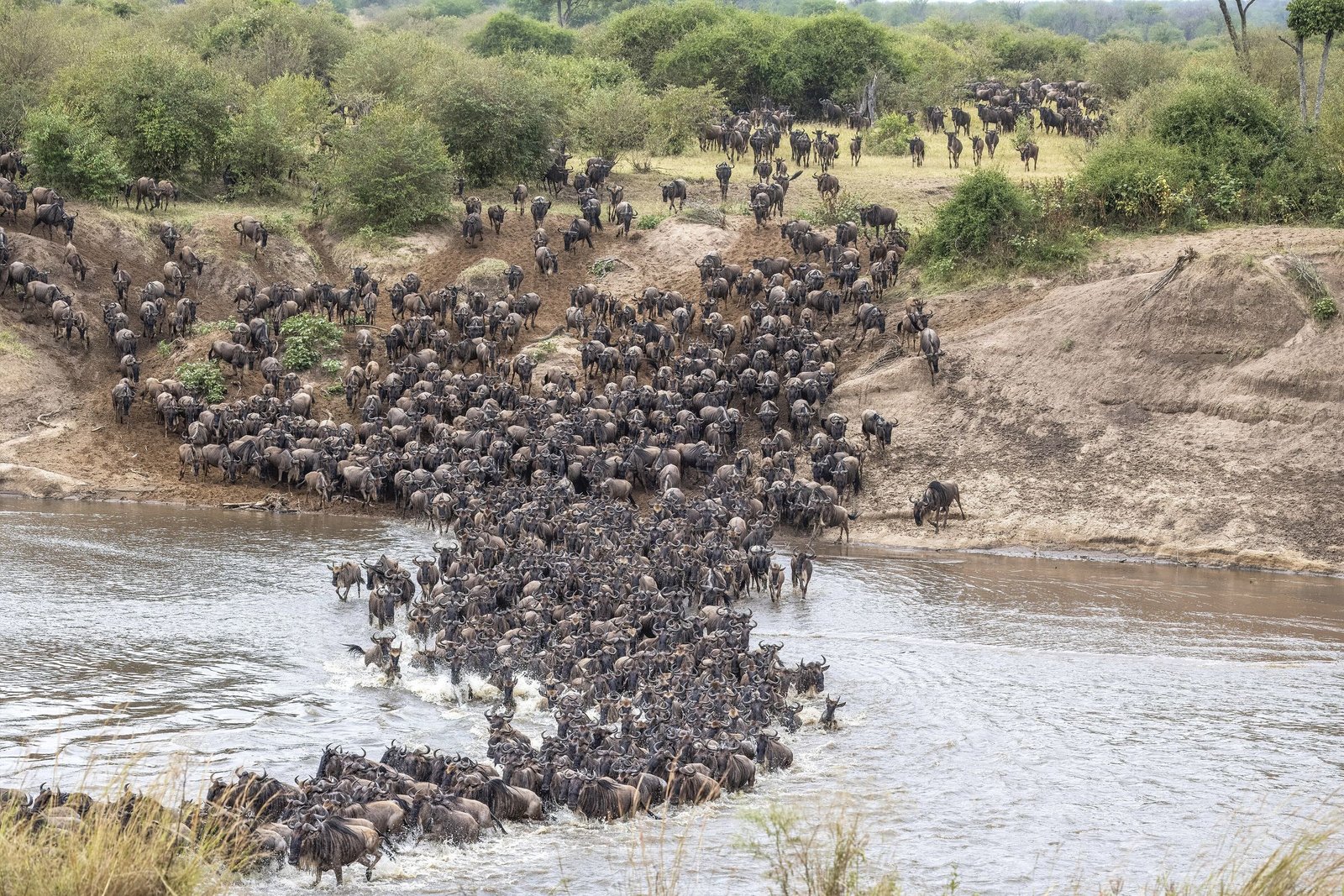
Around 1.5 million wildebeest circle the Serengeti every year. Pick a month to see where they usually are — and where we would base you.
Where the herds are
January
Southern Serengeti & Ndutu
The herds settle on the short-grass plains
After the short rains, the wildebeest spread across the mineral-rich plains of the southern Serengeti and the Ndutu area of the Ngorongoro Conservation Area. Calving begins towards the end of the month, and the predators gather.
ViewingCalving season
Where to stay
Seasonal camps around Ndutu and Kusini
Guide’s note
Book early — the best Ndutu camps fill up to a year ahead for late January and February.
Starting points, not packages. Each one can run privately or for your own group, and every detail is adjustable — change the lodges, the length or the parks.
Our most-requested journey: Tarangire, Ngorongoro and the Serengeti with a private guide, then three nights on a quiet Zanzibar beach to slow everything down.
The northern circuit at its finest: four ecosystems in seven days, an iconic crater-rim lodge, a remote big-cat camp in the Serengeti and a flight home to spare you the long drive back.
Fly straight to wherever the herds are this month, with three nights in a seasonal camp beside the action and a private guide who reads the migration’s rhythm.
Most private safaris cost between US$ 450 and US$ 1,200 per person per day, including your guide and vehicle, lodges, meals and park fees. Classic lodges sit at the lower end, iconic camps and fly-in safaris at the top. A typical 7–10 day trip lands between US$ 4,500 and US$ 12,000 per person. Shared safaris cost less per person, because you split the vehicle and guide with other travellers.
When is the best time to go on safari in Tanzania?
June to October is the dry season, with easy game viewing and the Mara River crossings. Late January to March brings calving in the southern Serengeti. April and May are wet but quiet and good value. Tanzania is a year-round destination if you choose the right parks for your month.
Is Tanzania safe for a safari?
Yes. Tanzania is one of Africa’s most stable and welcoming safari destinations. In the parks you are with your guide at all times; in towns, take the usual city precautions. We monitor government travel advice and brief you before you go.
Do I need a visa for Tanzania?
Most visitors from Europe, the UK and North America need a visa, best obtained online in advance through Tanzania’s official e-visa portal. A single-entry tourist visa costs US$ 50 for most nationalities and US$ 100 for US citizens. Your passport must be valid for six months beyond your stay.
Will we share a vehicle with other travellers?
Only if you choose to. On a private or group safari the 4x4 and the guide are yours alone, from the first morning to the last, and you decide when to start, where to linger and when to head back. On a shared safari you join other travellers on the same route and split the cost — and every guest still gets a window seat.
How do we book, and what deposit is needed?
Tell us your dates and wishes; a safari designer replies within 24 hours with ideas and a call. When the proposal is right, a 30% deposit secures your lodges and the balance is due 60 days before travel, by card or bank transfer.
08How it works
From first idea to first sunrise
Planning with us is simple, personal and free — you pay nothing until every detail feels right.
01
Tell us your wishes
Three quick answers below, or the full form in about a minute.
02
A designer replies
A safari designer reads your answers and replies personally within 24 hours.
03
Shape it together
We talk by video, phone or WhatsApp to shape the trip together.
04
Book with confidence
You receive a tailored proposal with live lodge availability — no payment until you are happy.




 10 days · 9 nightsNº 04